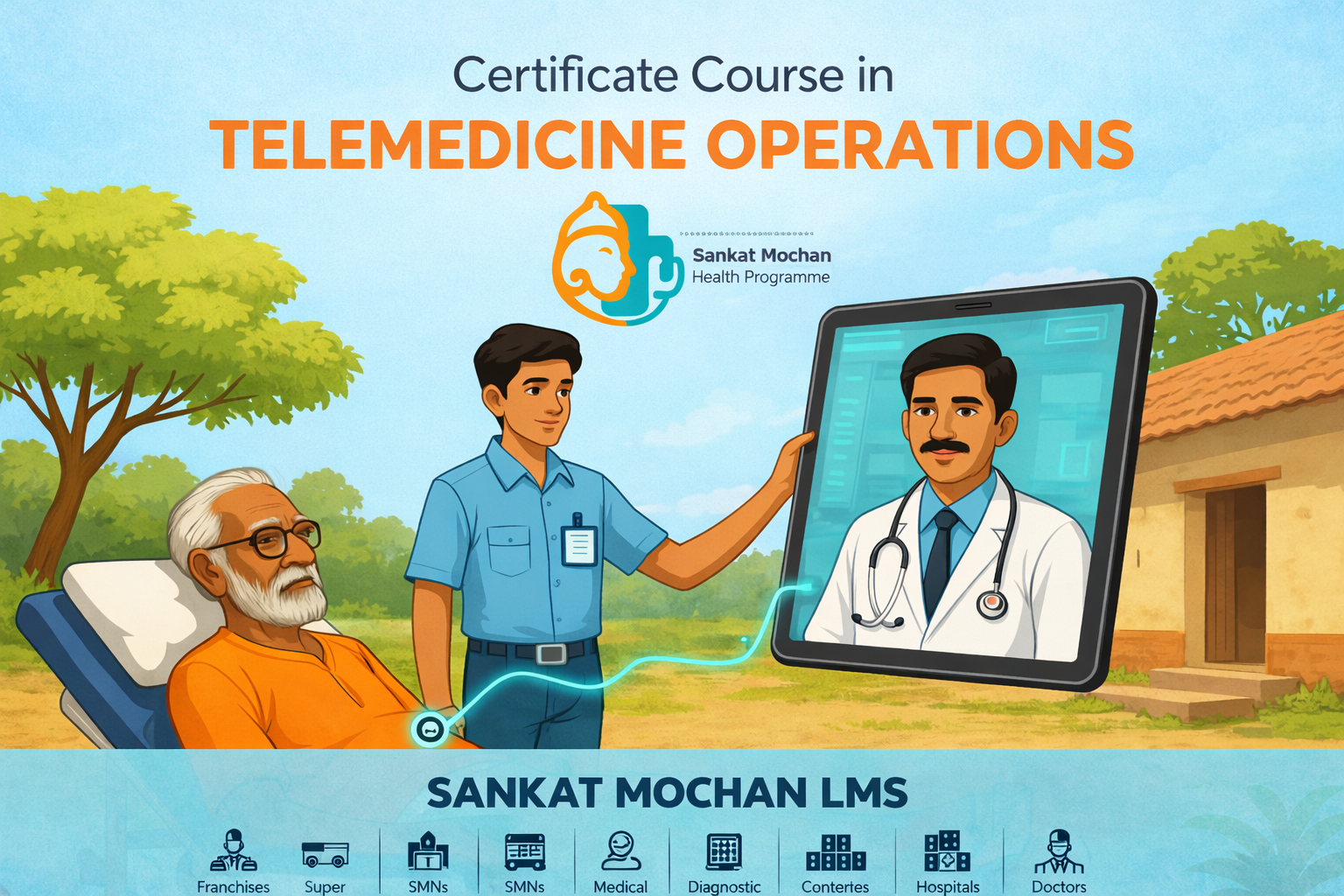
Here’s a clear description of a Certificate Course in Telemedicine Operations — the kind of training that would be part of a Sankat Mochan LMS for stakeholders in the Sankat Mochan Health Programme (like franchises, SMNs, doctors, clinics, medical stores, and diagnostic centres):
🎓 Certificate Course in Telemedicine Operations — Overview
A Certificate Course in Telemedicine Operations is a specialized training programme designed to equip learners with the practical knowledge, skills, and competencies required to operate telemedicine services effectively. It focuses on both clinical and operational aspects of telemedicine so participants can support, manage, or run virtual health services safely and professionally.
Courses like this are ideal for healthcare professionals and allied stakeholders who are part of a digital healthcare delivery network.
📌 Purpose of the Course
The main goals of this certificate course are:
-
To understand how telemedicine works (technology, communication, platforms).
-
To learn operational standards, workflows, and best practices for virtual healthcare.
-
To gain confidence in handling tele-consultations, patient data, and digital tools.
-
To understand telemedicine legal, ethical & privacy issues.
This combination ensures that graduates can run or support telemedicine services competently in their organisations.
🧠 Typical Course Content
Although the exact syllabus may vary, most telemedicine operations certificate courses include:
📍 1. Introduction to Telemedicine
-
What telemedicine is and how it has evolved
-
Types of telemedicine (video, audio, store-and-forward etc.)
-
Benefits and limitations
📍 2. Technology and Infrastructure
-
Telehealth platforms and software
-
Hardware basics (cameras, peripherals, secure internet)
-
Digital record systems and connectivity
📍 3. Operational Workflows
-
Setting up tele-consultation sessions
-
Scheduling, patient onboarding
-
Recording and managing virtual visits
📍 4. Communication & Patient Interaction
-
Professional virtual communication skills
-
Patient education and consent procedures
-
Handling follow-ups and referrals
📍 5. Legal, Ethical & Compliance Aspects
-
Patient privacy & data protection
-
Licensing and regulatory requirements
-
Telemedicine policy basics
📍 6. Security & Data Protection
-
Securing patient health information
-
Ensuring confidentiality of digital records
-
Risk management practices
📏 Duration & Mode
-
Course duration typically ranges from a few weeks to several months, depending on intensity, credits and hands-on experience.
-
Many programs are online or blended (online + practical), making them accessible to working professionals.
🎯 Who Should Attend?
This course is especially suitable for:
-
Healthcare providers (doctors, nurses, paramedics)
-
Medical store owners & staff involved in telehealth
-
Diagnostic centre coordinators handling virtual consults
-
Community health volunteers (like Sankat Mochan Nagrik)
-
Programme administrators and franchised partners
It helps them deliver, manage or support telemedicine services in the field.
🏆 Certification & Benefits
After successful completion, participants receive a certificate of competence — often recognized within healthcare networks and useful for:
-
Enhancing professional credibility
-
Supporting compliance with telemedicine standards
-
Improving patient trust and service quality
-
Unlocking new roles in digital health delivery